
Little Learners, Big Adaptations: How Toddlers Learn to Thrive in New Seasons
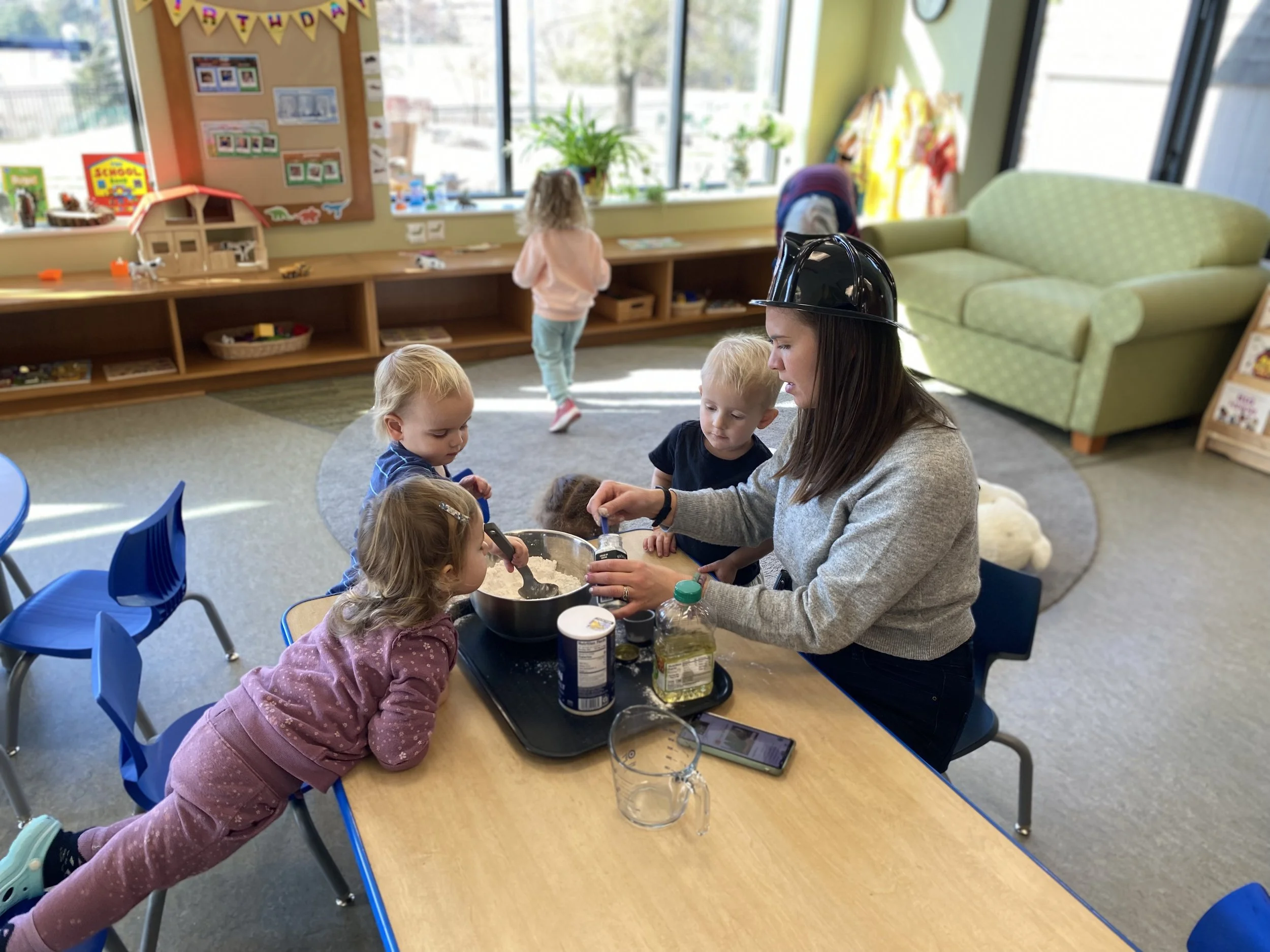
Eagan’s Spring Room toddlers make play dough by adapting to a group (instead of solo) project, and learning to measure, pour, and mix through observation and hands-on experience.
One of the most remarkable things about young children is their ability to adapt. For our two- and three-year-old toddlers, this school year has brought many “firsts”: their first classroom experience, first teachers, first group of classmates, and first time being part of a school community. While these changes can feel big, even overwhelming at times, toddlers are uniquely equipped with curiosity, resilience, and a deep capacity to learn through connection and experience.
At the beginning of the year, many children arrived holding tightly to their grown-up’s hand, unsure of what the day might bring. Yet, day by day, we’ve watched them adapt. They begin to recognize their teachers as trusted caregivers, find comfort in familiar classroom rhythms, and build relationships with their peers through play, laughter, and even the occasional disagreement. These moments, both joyful and challenging, are all part of how children learn to navigate the world.
Our classroom routines play an important role in helping children feel safe and secure. Predictable moments like morning greetings, snack time, and outdoor play help toddlers understand that there is a consistent sequence to their day. Once routines become familiar, children gain confidence. They begin to participate more fully, express their needs, and take small but meaningful steps toward independence. What may look simple on the surface like washing hands, putting on boots, or cleaning up toys, is actually powerful practice for adaptability and self-regulation.
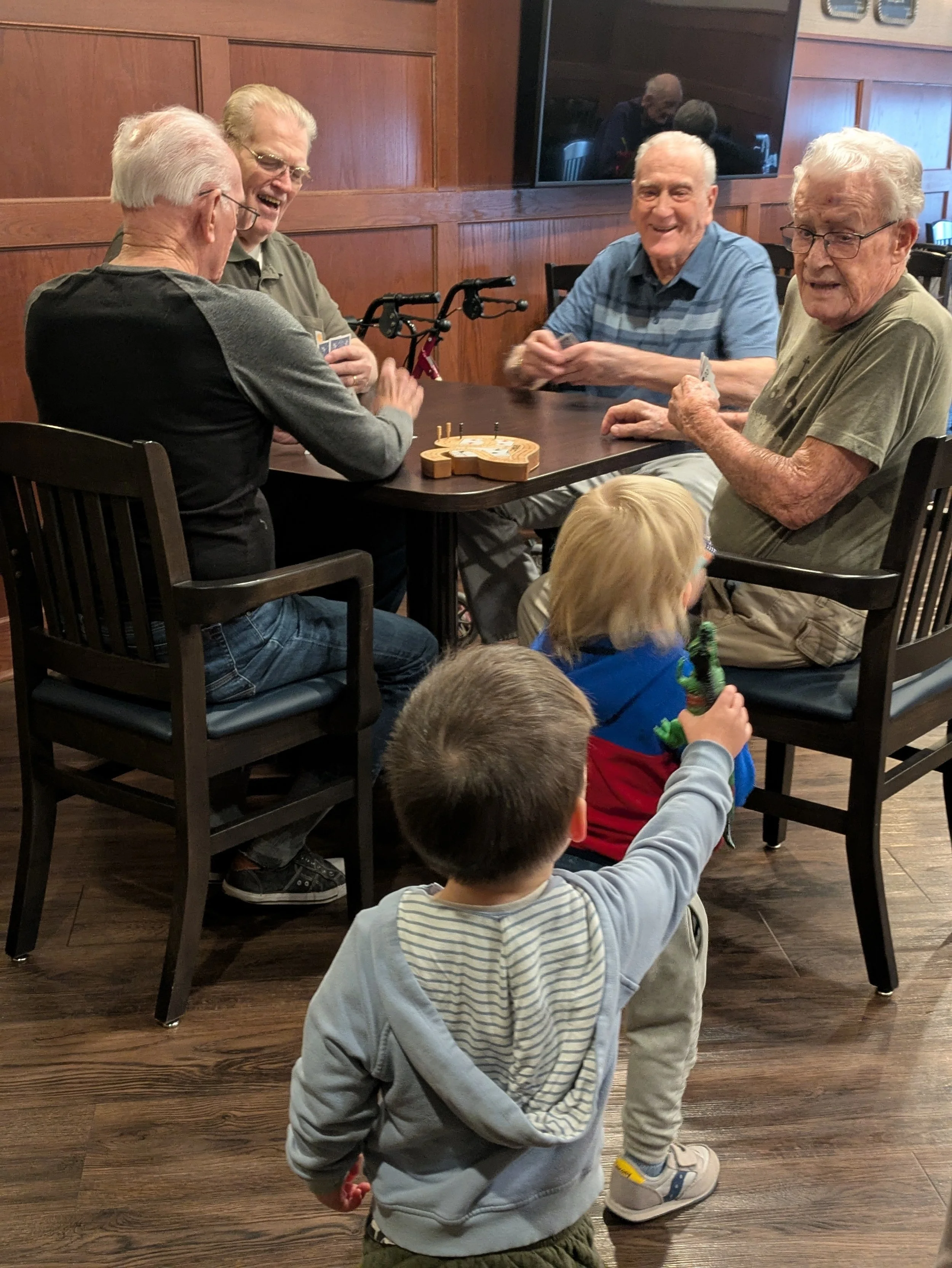
Through intergenerational contact, children learn adaptability in a deeply human way. As they interact with older adults, toddlers practice gentleness, patience, and communication across differences. These relationships help children understand that community includes people of all ages, and that connection can take many different forms. While these experiences are new for some children, they rise to the occasion with openness and joy.
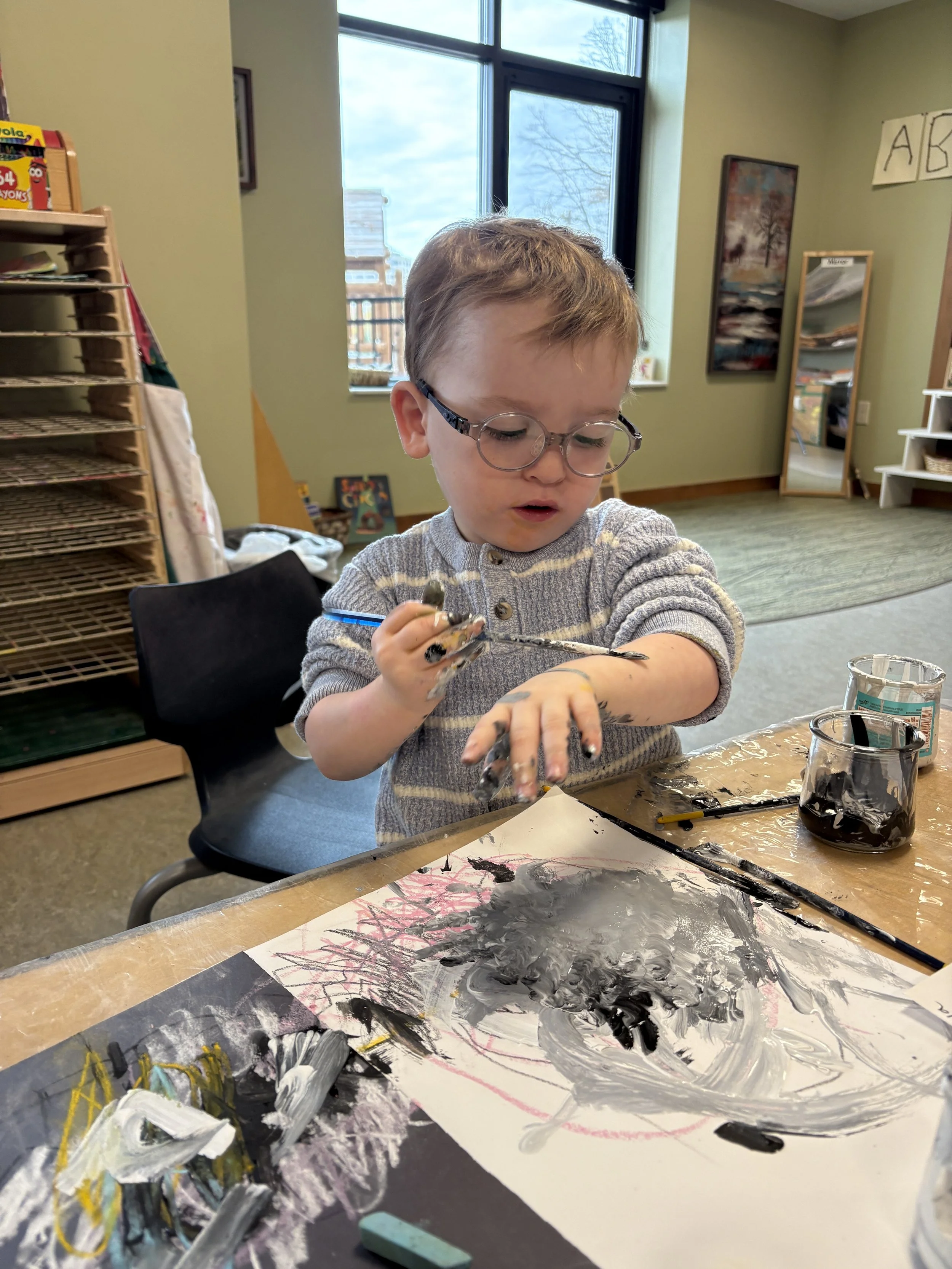
A toddler artist mindfully wandering from the paper to his own canvas!
Art is another space where we see adaptability flourish. In our dedicated art studio, children are invited to explore materials freely, and without a set outcome in mind. This process-based approach encourages flexibility, problem-solving, and creativity. Children learn that it’s okay if something doesn’t turn out as expected, and that exploration itself is valuable. Adapting in art might mean trying a new tool, adjusting when paint drips, or discovering a different way to express an idea.
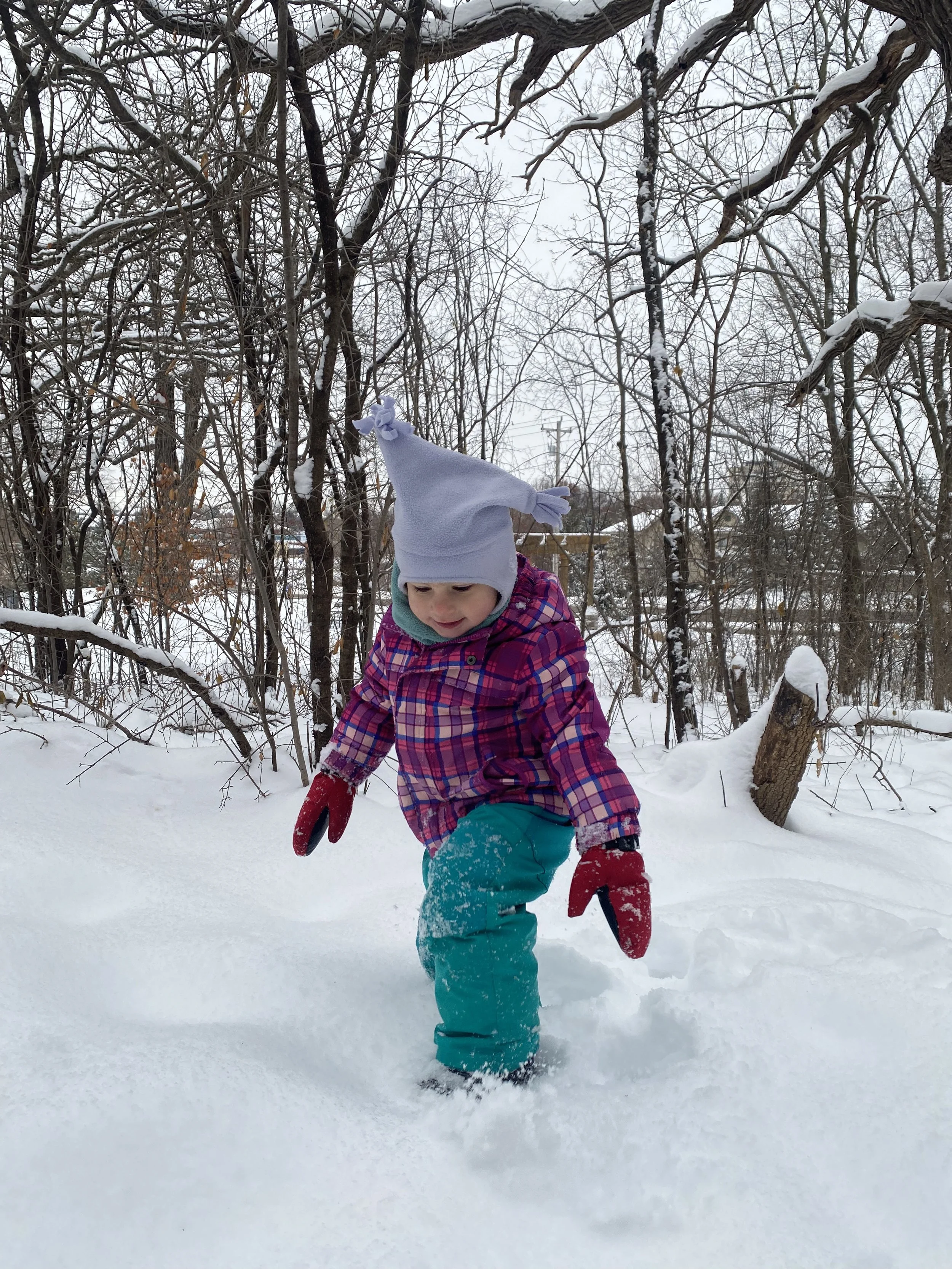
Confident steps in fresh snow.
Nature, too, asks children to adapt, and Minnesota has given us a wonderful opportunity to experience this firsthand. As the seasons shift and snow blankets our playground and woods, children are learning what it means to play, explore, and thrive in colder weather. At first, bundling up in snow pants, boots, hats, and mittens can feel like a challenge. But with support and practice, children adapt quickly. Soon enough, they’re stomping through snow, noticing animal tracks, feeling the crunch beneath their boots, and discovering the magic of winter play.
Outdoor time in all seasons helps children build resilience and confidence. They learn that their bodies are capable, that nature changes, and that joy can be found even on cold, snowy days. These experiences foster adaptability not just to weather, but to life’s many transitions.
As educators, we are continually amazed by the growth we see in your children. Adaptability doesn’t happen overnight, it’s built through trust, repetition, encouragement, and meaningful experiences. Whether it’s adjusting to a new routine, forming a friendship, creating art, connecting with a senior resident, or embracing winter, our toddlers are learning that they can handle change.
Thank you for trusting us with your children during this important first school experience. Together, we are nurturing adaptable, curious, and confident learners, one small step at a time.