
A Seat At The Table: Making Room For Elderly Adults At Our Family Gatherings
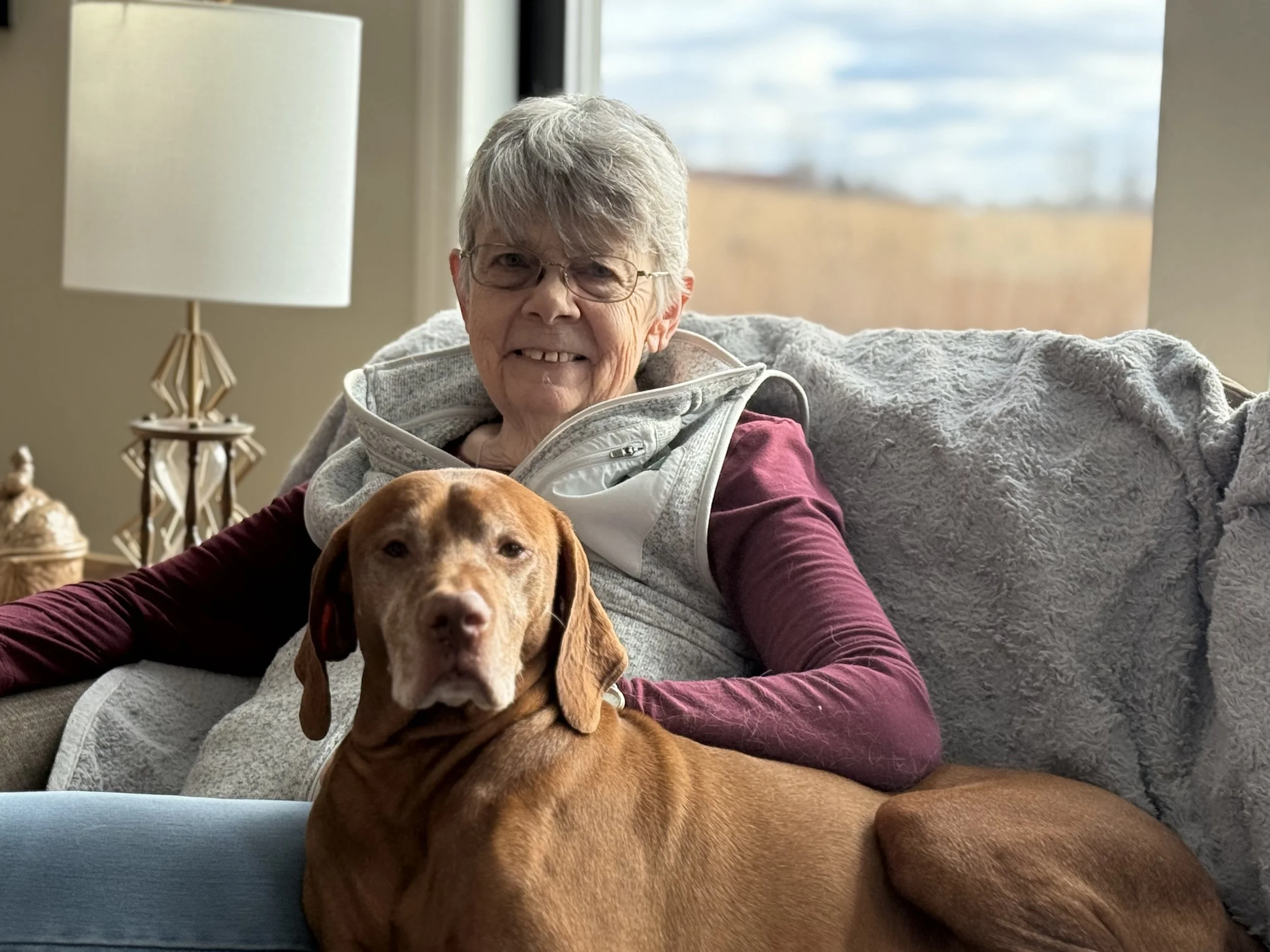
Last week, families around the country came together in the spirit of abundance, generosity, and togetherness. Mine did, too. My children, husband, my mother, and I smiled as the dogs raucously announced family member after family member at the door (along with two dear friends we consider family). Everyone entered, best foot forward, with cheerful greetings for all. I got lost in the bustle of the kitchen, last minute pies baking, mashed potatoes in the oven, stuffing, too, grateful that we’d had everyone sign up for a dish.
My mother sat at the table, listening, watching the conversations all around her. Alzheimer’s has progressed along with her age over this year, but she still enjoys the quick back and forth banter of light-hearted conversations as a spectator sport. She took a short break in her room after a couple of friends left for their own festivities, commenting on how sometimes “a lot of people is just too much for her.” I validated her and supported her stepping away for a while and she promised she would come out to eat. When dinner was served, I helped her load her plate and wheel her plate over to the table on her walker.
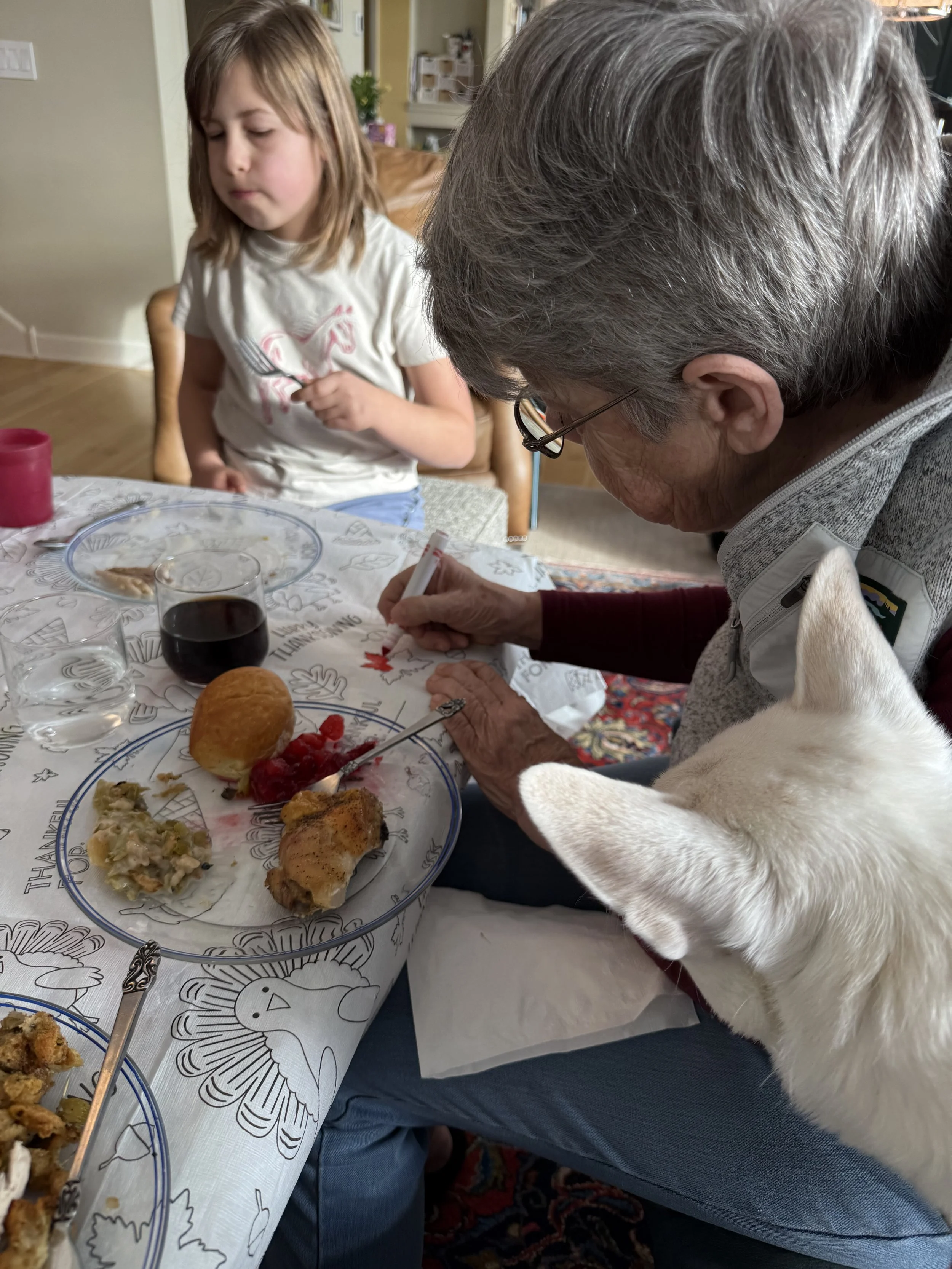
It turned out there were no seats left. For some reason that none of us can figure out, no one able-bodied or younger offered her their seat. I guided her to the small, lower table where my children sat and tried to situate her on the ottoman so that she could eat. She took breaks from taking bites to color in a leaf or a turkey feather on the color-your-own tablecloth I’d laid out. After a few minutes, though, she asked to move to the couch with her plate. I couldn’t blame her; admittedly the ottoman provided no support of any kind, and it related to the low table pretty awkwardly. She loaded her plate on her walker and moved herself to the end of the couch, where the cushions hugged her sides and back, and the armrest braced her elbow as she held her plate in her lap to eat.
As I looked over my shoulder at her, focused on eating her Thanksgiving meal, alone on the couch in the empty living room, I felt something come into focus. All of a sudden, what I wanted for our last holidays before she moved to a memory care location sometime in the coming year became salient though simple. I want her to be the priority and enjoy herself. I don’t want her to simply co-exist in our space. I want her to have a seat literally and figuratively at the table. While everyone had greeted her, no one had really talked to her, not even me, so busy hosting and baking. After that initial moment of warmth, she was progressively more sidelined as we moved through dinner: from the table, to losing her seat, to the kids’ table, to the couch, alone. She seemed aimlessly adrift in the social churn, slowly drifting away.
The winter holidays are my mother’s favorite time of year. Thanksgiving is the opener to a season full of cheer, kindness, traditions, and fun. I was flooded with the urge to protect her in this season more than anything. So much so that I actually ended our Thanksgiving abruptly, before dessert was served. I quickly put on “The Sound of Music,” one of my mother’s favorite movies, and I served apple pie, her favorite, and it was magical. Her face lit up and she relaxed. It was just the hit of nostalgia that she needed. She mouthed the words to the songs. She talked with my children about the different plot points. They asked good questions. The pie was good. And it was right. It just was.
This was my realization: people - myself included at one time - have become accustomed to relegating older people to the isolated and blurred edges of social events and we don’t even realize we’re doing it. It’s through working at All Seasons, and interacting with seniors on a regular basis, reacquainting myself with their humanity, holding my mother’s hand as she enters this chapter of her life that I’ve become more aware of it. I know that no one in my family, any family, would do this intentionally. I thought I’d share the list of ways to include and connect with the elders in my family in hopes that you are inspired to find ways to do so in your own holiday gatherings.
Sincere Salutations
Your preschoolers can teach you this! At All Seasons, children learn to greet each individual person “upstairs,” by looking at their face, saying hello, and offering a hug, a handshake, a high five, or a wave. As an adult you could add, “How’re you doing?” but only if you’re ready to listen to the response. Before they leave, repeat the above so that they know you were glad they were there.
Give them a seat at the table - a comfortable one.
Reserve seats for elderly and disabled folks.
Name Tags
Assign someone to ensure the elder doesn’t feel forgotten or overlooked.
Let them be near the conversation, if not in it - unless they don’t want to be.
Create a quiet area for elders (and kids?) to take breaks away from the commotion.
Start A Conversation
Sometimes, not much is said to an older person at a family gathering beyond the greetings and goodbyes. If you can find a few minutes, sit with a parent, a grandparent, even someone else’s grandparent, and ask them a real question. You may unearth a treasure. I’ve included a list of sample questions at the end.
Give Them Something to Do
I realized that poor seating aside, having my mother at the kids table was actually a good thing. She loves her grandchildren, they are familiar to her, she is comfortable with them, and I had put a coloring tablecloth on the table, and she was enjoying coloring with them! Here are some ideas for things to do:
Playdough
Coloring pages
Board games
Ask them if they have any old family photos of holidays to share.
What are their favorite holiday songs? Print the lyrics, pass them out, and have everybody sing along!
Ask them if they’d like to help you in the kitchen or set the table.
Treat Them As The Multifaceted, Unique Individuals They Are
My mother has a hard time responding to questions and it is easy to falsely assume that she is not interested in conversation. But on the contrary, she loves to be in the thick of conversation, listening, laughing along, at least up to a point. Another individual may want something else entirely. Pay attention, and don’t be afraid to ask them.
In the end, what made our Thanksgiving memorable was not me ending it early for everyone else, but what happened after: my mom and me, and my children watching an old movie and talking together about the plot, the characters, the history, and the good and bad of it all. I will never forget the way she smiled and whispered along with songs. I don’t regret a thing.
I hope your holidays are filled with memories whether they are poignant, silly, powerful, or surprising. I hope there isn’t a regret among them.
Resources:
List of Sample Open-Ended Questions:
Which particular Thanksgiving/Christmas/Hannukah/Solstice/etc. stands out in your memory?
What’s your favorite holiday tradition?
Was there something you always wanted and wished for as a child, but never got? What do you wish our family did more of during the holidays?
Did you ever get in trouble as a child?
What did your childhood bedroom look like?
What was one of your favorite trips?
Who were the loves of your life?
Tell me that one story again.
Useful Websites:
https://www.nytimes.com/2025/11/24/well/interviewing-older-relatives-questions.html#
https://www.thoughtco.com/fifty-questions-for-family-history-interviews-1420705
https://storycorps.org/participate/great-questions/
https://www.seniorhelpers.com/pa/warren/resources/blogs/2023-04-17/
https://elderhealthathome.com/how-to-host-a-great-intergenerational-family-gathering/