
Building Oral Language at Home and School
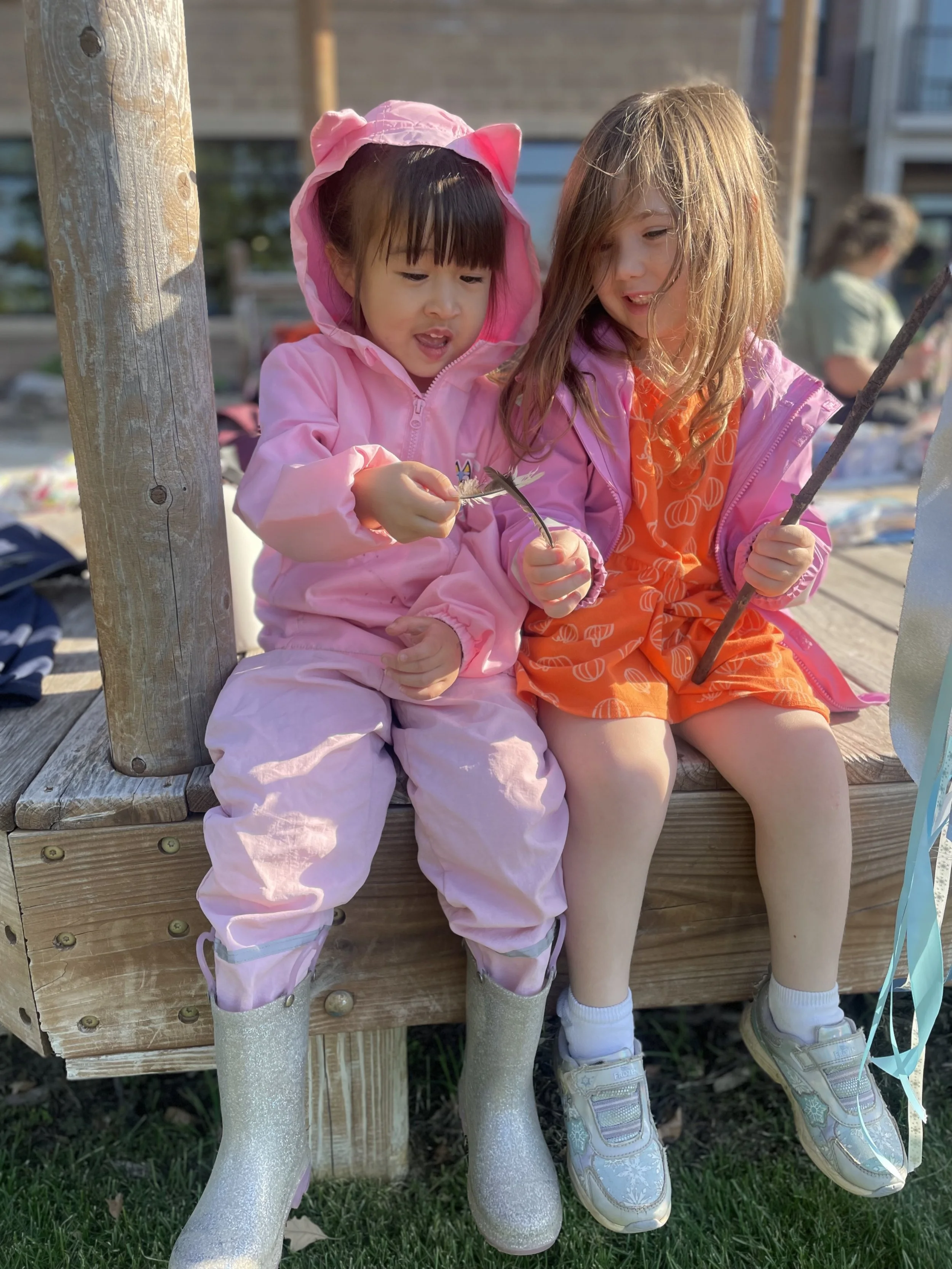
Children having a conversation about found artifacts - repeating and learning all important vocabulary along the way.
There seems to be an ever growing pressure to get our children to read and write at an early age. As an early childhood educator this concerns me because when we push academics too early we forget about the steps needed beforehand. If we want to raise strong readers, children first need to have a strong oral language foundation. Simply put, the more words a child knows the easier it will be for them to learn to read and write when they are ready. This is why in the Autumn Room at Eagan we intentionally encourage conversations throughout the day. When we read books, we pause and let children make comments or we may ask questions like, “what animal do you think is next?” or we narrate what we see like, “I notice a mouse in this picture.” We intentionally try not to shush the children or try to make them be quiet. Our snack times can also go a little long because the children are having rich conversations with each other and the teachers. Sometimes they tell jokes to each other, sometimes they share what each one has in their snacks, and sometimes they tell each other about things they did at home. Lunch and snack time has become one of my favorite parts of the school day because of the conversations I get to have with the children and the conversations I get to listen to among the children.
If you are interested in fostering more oral language with your child, here are some tips for making conversations:
Narrate what you see or what you are doing.
At the grocery store tell them what you are shopping for. For example: “We got apples. Next we need to get bread.”
Repeat back what they say to you and correct any language errors they made.
Child: Alex has the truck.
Adult: Yes, you have the truck.
Ask them an open-ended question after they make a statement.
Child: We went to the woods.
Adult: You went to the woods. What did you do in the woods?
Expand on their comments.
Child: I built a big tower.
Adult: You built a very big tower. It’s almost as tall as you. Should we see if you are as tall as the tower?
Give your child time to respond to you.
This can feel tricky to have a long pause, but try giving your child a little longer to respond. They may just need some “think time.”
Get down on their level so you are face-to-face and put away distraction, like your phone.
This helps children feel more comfortable and open to continuing to talk with you.
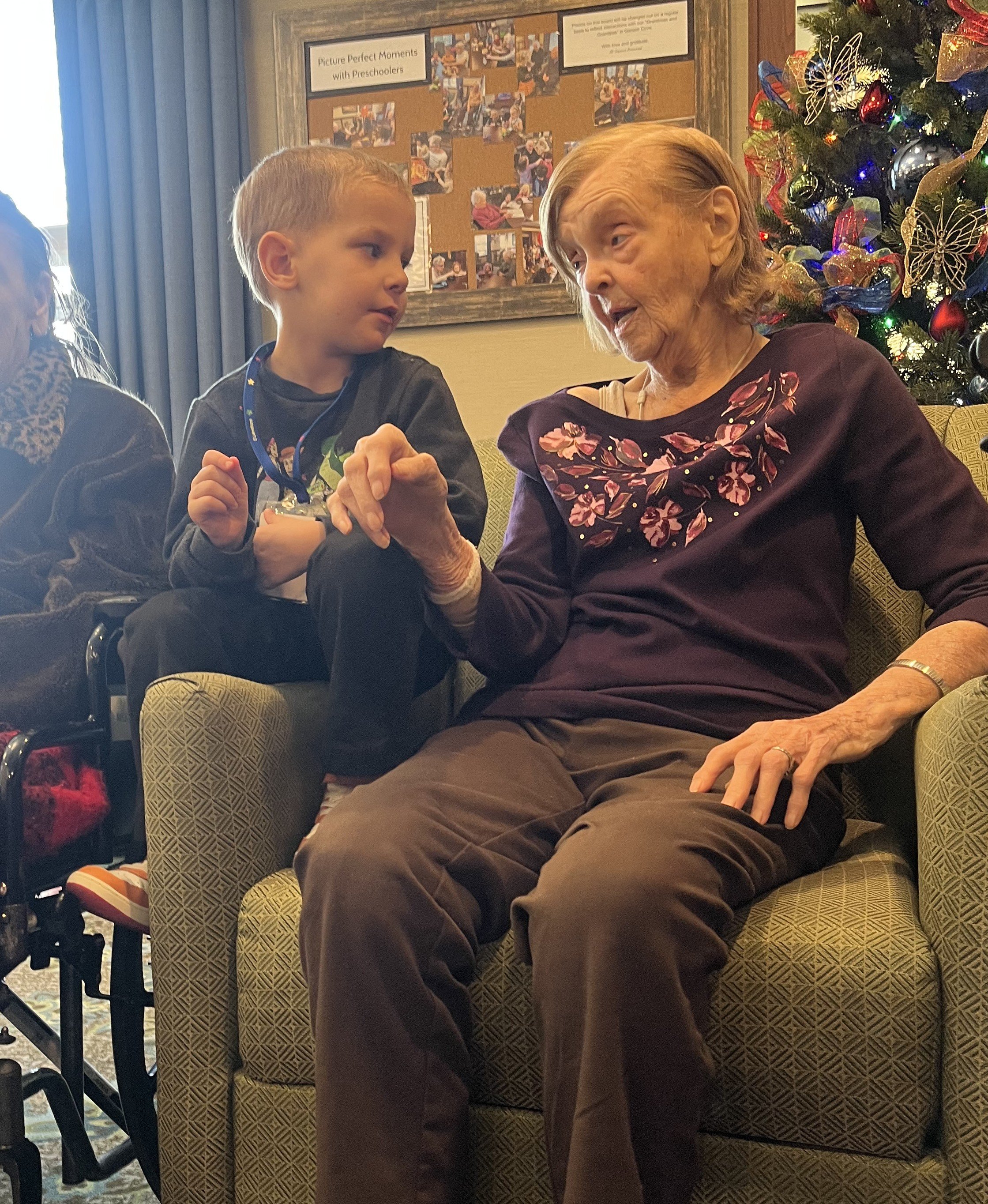
A good conversation with a grandma builds pre-literacy skills, in addition to connection and community.