Learning to Wait
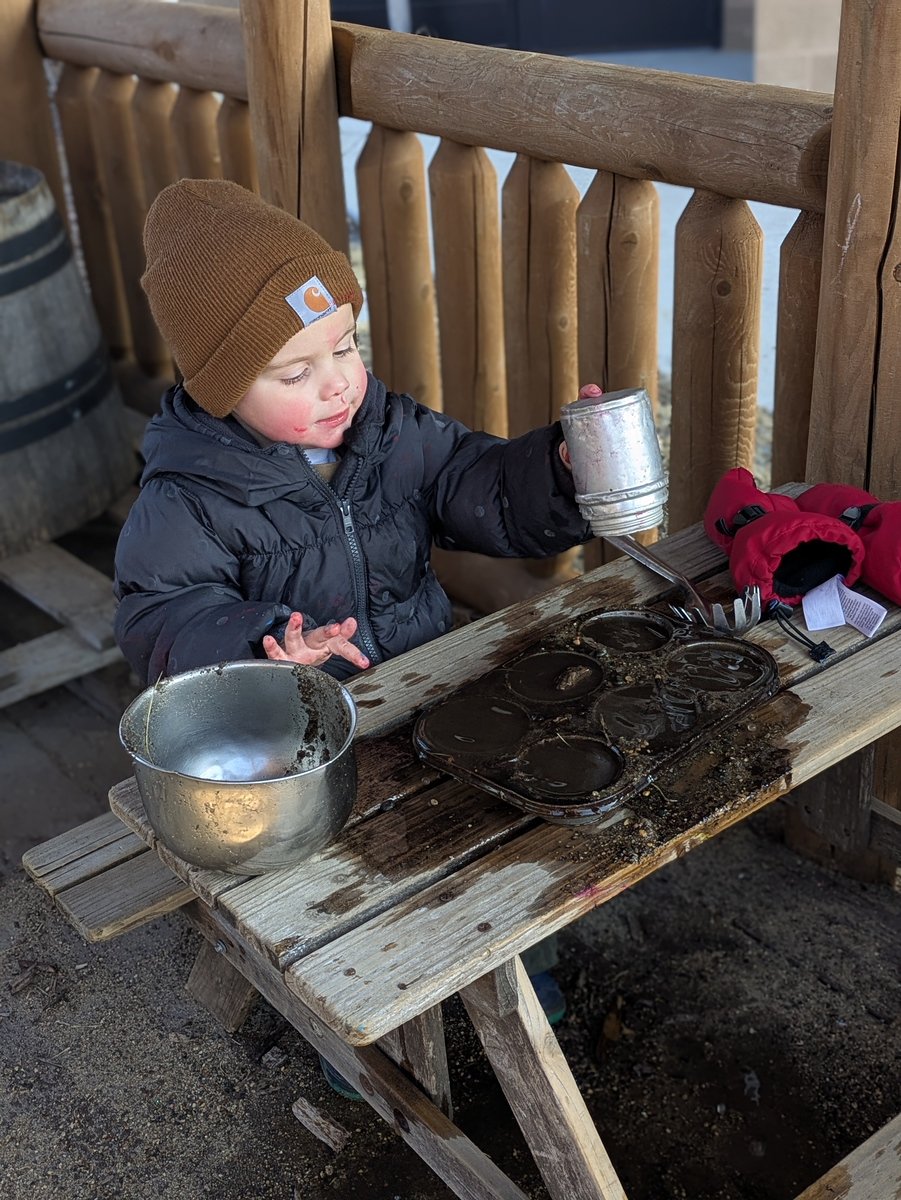
A preschooler truly “messing around” in the mud kitchen
"We need to know how to recognize a new presence, how to wait for the child. This is something that is learned, it’s not automatic. We often have to do it against our own rush to work in our own way. We’ll discover that our presence, which has to be visible and warm, makes it possible for us to try to get inside the child and what that child is doing. And this may seem to be passive, but it is really a very strong activity on our part."
-Loris Malaguzzi, founder of the world-renowned preschools of Reggio Emilia, Italy
from "Your Image of the Child: Where Teaching Begins"
It’s one of the hardest things to learn, as a teacher or as a parent: to wait. Waiting is an active choice, not a passive thing. After forty-plus years of teaching young children, I still must practice with mindful intention every day. This is especially true for me as a person whose nature is to be efficient, organized, and goal-oriented.
I truly enjoy planning; I find pleasure in envisioning how a project or activity will go and moving through the steps efficiently, and I find satisfaction in completion. But that is not always how young children learn best. Pre-planned activities and routines provide needed structure and predictability for children. Still, real learning happens more often in the spontaneous discoveries that children make as they explore, play, and simply “mess around.” Messing around takes time. Experimentation can’t be rushed, or the rushing will prevent the discovery.
So, we adults – parents and teachers alike - must learn (and re-learn and re-learn!) how to wait. How to follow the child’s pace. How to observe the child’s process without obstructing it. How to offer support for their play without disrupting it. We must pay quiet attention, notice, and gently verbalize what we see as children discover, create, or figure something out for themselves.
Waiting is especially hard when you have an adult agenda that seems imperative: getting ready to leave the house, getting dressed for outdoor play, getting to bed on time. Finishing a project in the art studio or classroom so we can move on to the next task or make room for the next group of children who need to have a turn.
That’s when mindfulness and breathing come in to slow me down. I take a pause and ask myself: What is most important here? In this moment (one of hundreds that will happen during the day), what is the most essential thing?
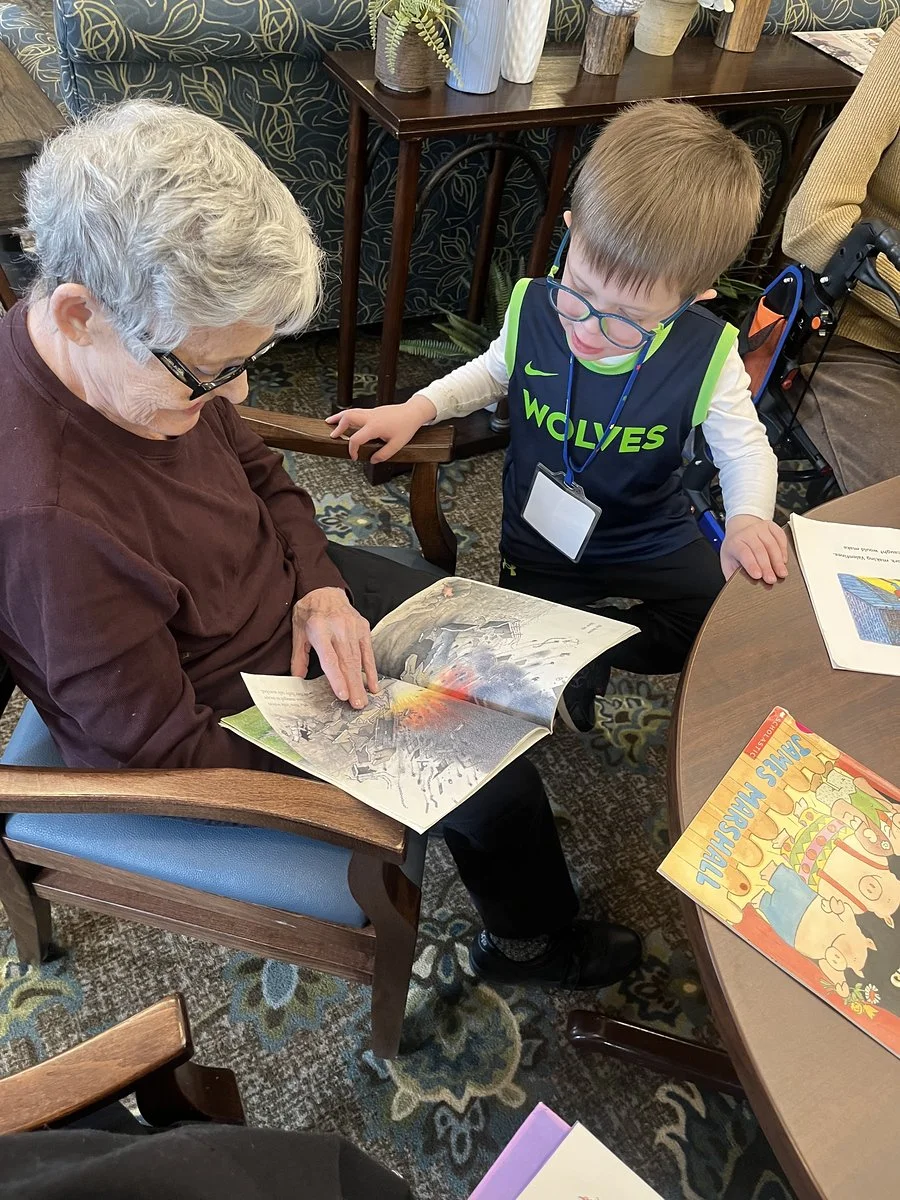
A treasured exchange with a resident - worth fighting the urge to “move on”
Maybe a child finding satisfaction in putting a few more brushstrokes of paint on their painting matters more than getting everyone’s hands washed within the next two minutes. Maybe a child pulling on their own snowpants instead of having an adult do it for them will help build that child’s sense of competence and is more important than getting out the door “on time.” Maybe after a bingo game, making sure every child has looked into the eyes of each of the seniors they’ve just played with and said a genuine, warm “good-bye” prioritizes their growing relationships rather than rushing back to the classroom. Maybe watching a child turn over the hundredth rock as they look for worms is worth staying in the woods an unplanned extra ten minutes.
I often must subvert my own urge to “move on” in order to create enough room for the children’s discoveries, which cannot be scheduled. Though it may look passive from others’ perspectives, in practicing waiting, I am learning every day to see what each child is showing me.
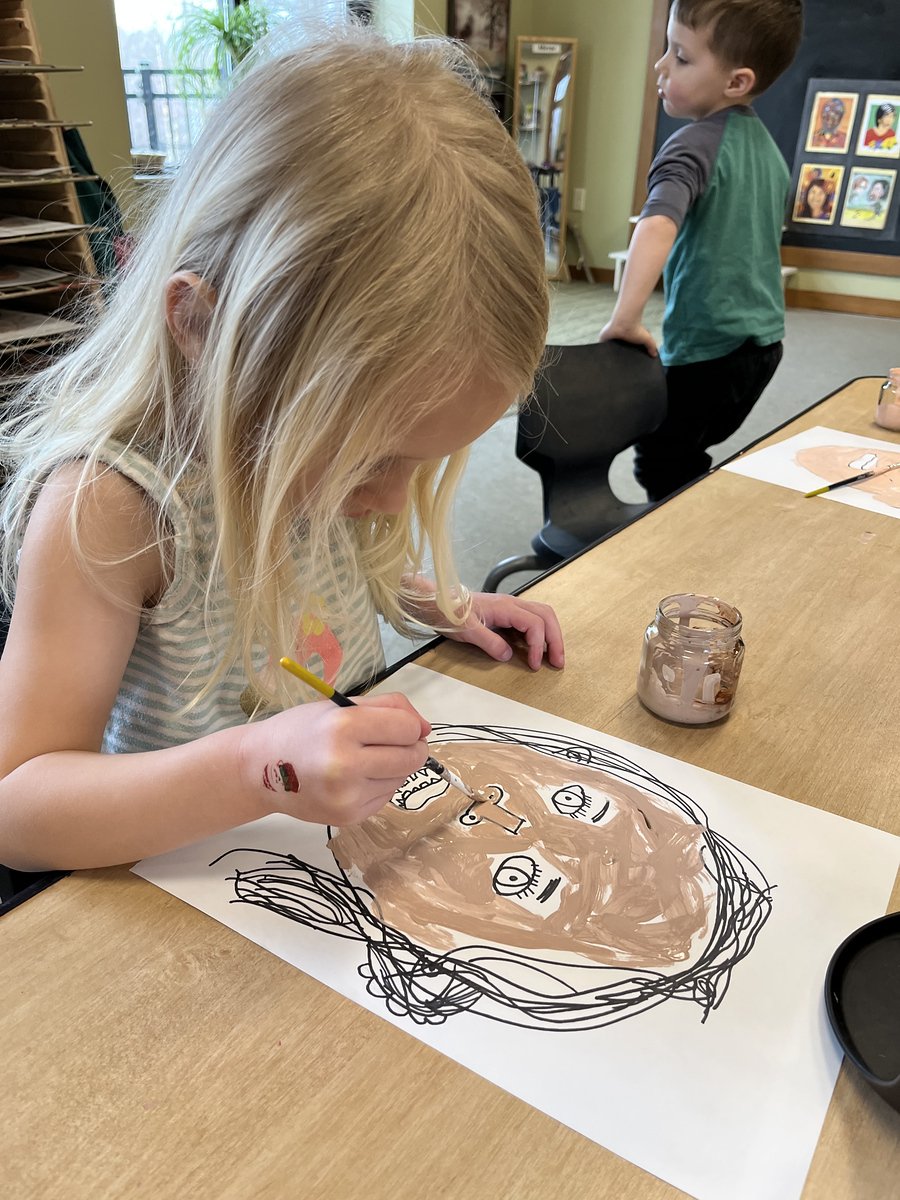
A beautiful self-portrait: the product of a process filled with discovery for the child and teacher alike.