
The Worth of Long-Term Projects in Preschool
My class recently wrapped up a long-term project, and we’re right in the middle of two more. I’ve been reflecting on how much I appreciate getting to do these types of projects with preschoolers. They are rewarding to me as a teacher and a human being because the long process of working together towards an eventual goal makes celebrating the result even sweeter. It’s also a natural way to involve “experts” - seniors, building workers, other teachers, or text resources, with our classroom work. The children may not see the breadth of the project in its entirety, but each step of the process is new and engaging in its own right.
Project: Sugaring (Making Syrup from Sap)
The syrup-making process draws out long. One day this year, we introduced our ultimate goal of a pancake party to the class during morning group time. During our outside play time, we collected one bucket of sap. In the afternoon, a child asked, “Aren’t we having the pancake party today?” The concept of a task leading only to another task for several days, even weeks, is often as new to the children as the process of sugaring itself!
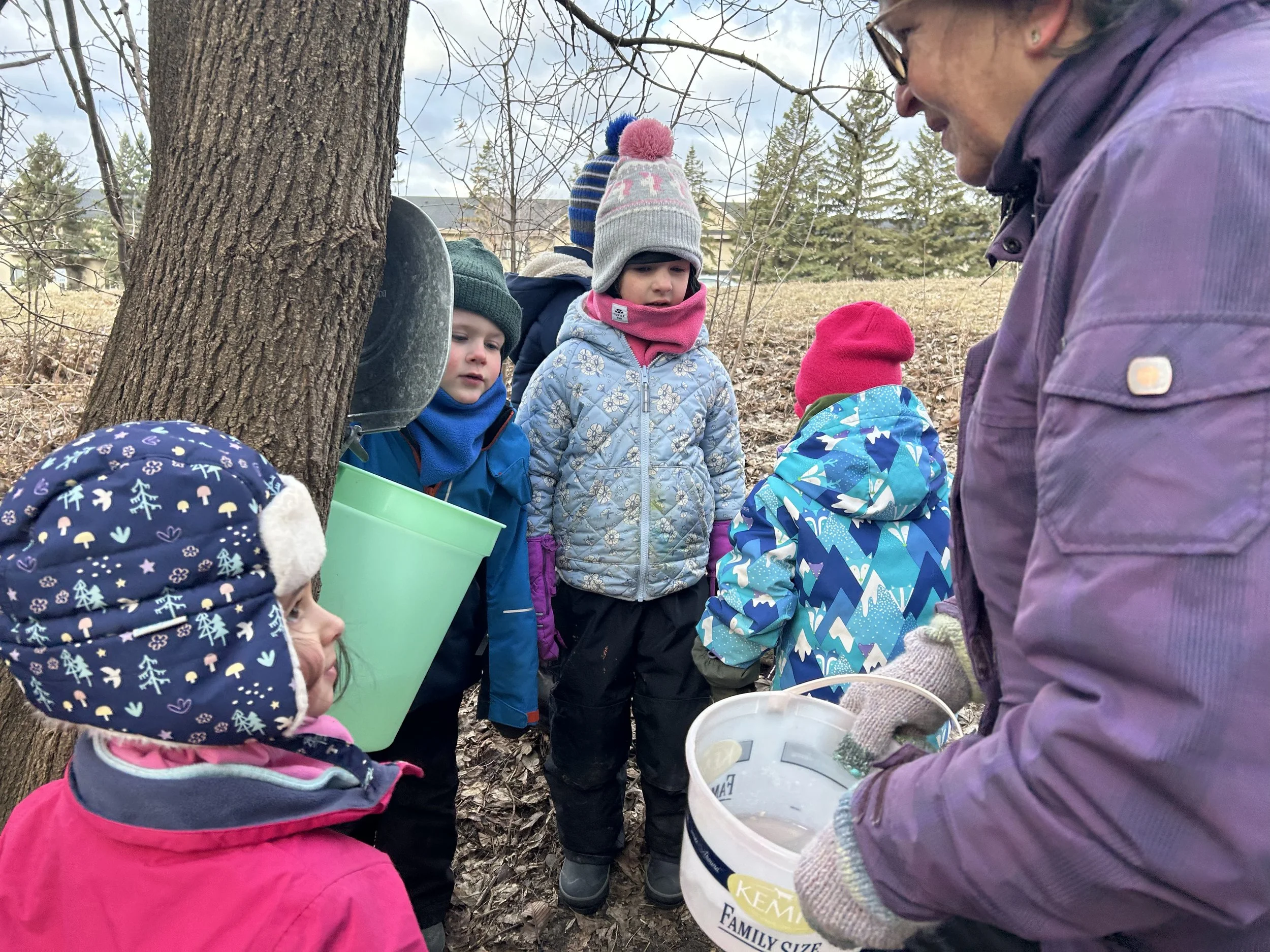
Checking the sap buckets is always exciting!
We started boiling sap last week. We still have about a week until we meet the milestone of making syrup. After that, we have to plan the party, create and send the invitations, make the pancakes, and set the tables. All week, we heard a chorus of “Is the syrup ready yet?” and each time, we all got to practice patience. Good thing the children are experts at living in the moment, and quickly returned to marveling at the rolling boil in the vat of syrup and to helping the teacher split wood for the fire we tended under the cauldron of sap.
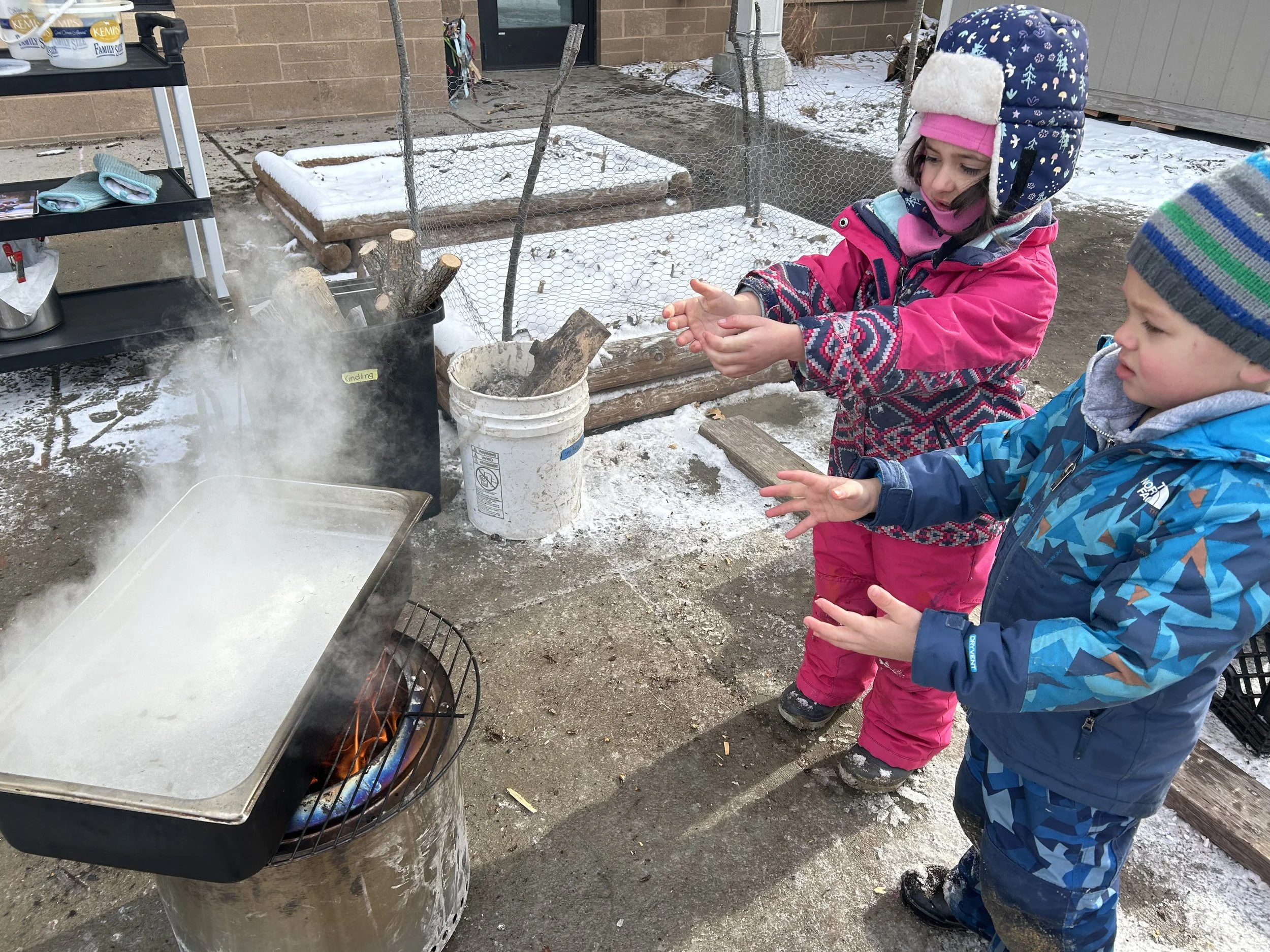
Warming hands by the boiling sap
During the sugaring project, seniors are naturally involved. Jerry and Marie, the building’s birdwatchers, keep an eye on our sap buckets over long weekends and let us know if they need securing. A few years ago, a grandma brought in some syrup her daughter had made so we could compare its taste with our own. The residents of Lexington Pointe smell the smoke of our fire and can see the sap boiling down through their windows.
This year, we decided to involve the seniors in Memory Care in our taste-test observations. During group time, the children have had a chance to test the sap fresh from the tree, and then again after it had boiled down all morning. During our memory care time last week, we took up a jar of sap and some cups and asked the grandmas and grandpas if they wanted to try our sap. One of our older preschoolers carefully poured a small amount into each cup. Other children asked the seniors questions like “Does it taste sweet?”, “Does it taste sour?”, and “Do you like it?” The teacher recorded the answers, and we shared them with the rest of the class later.
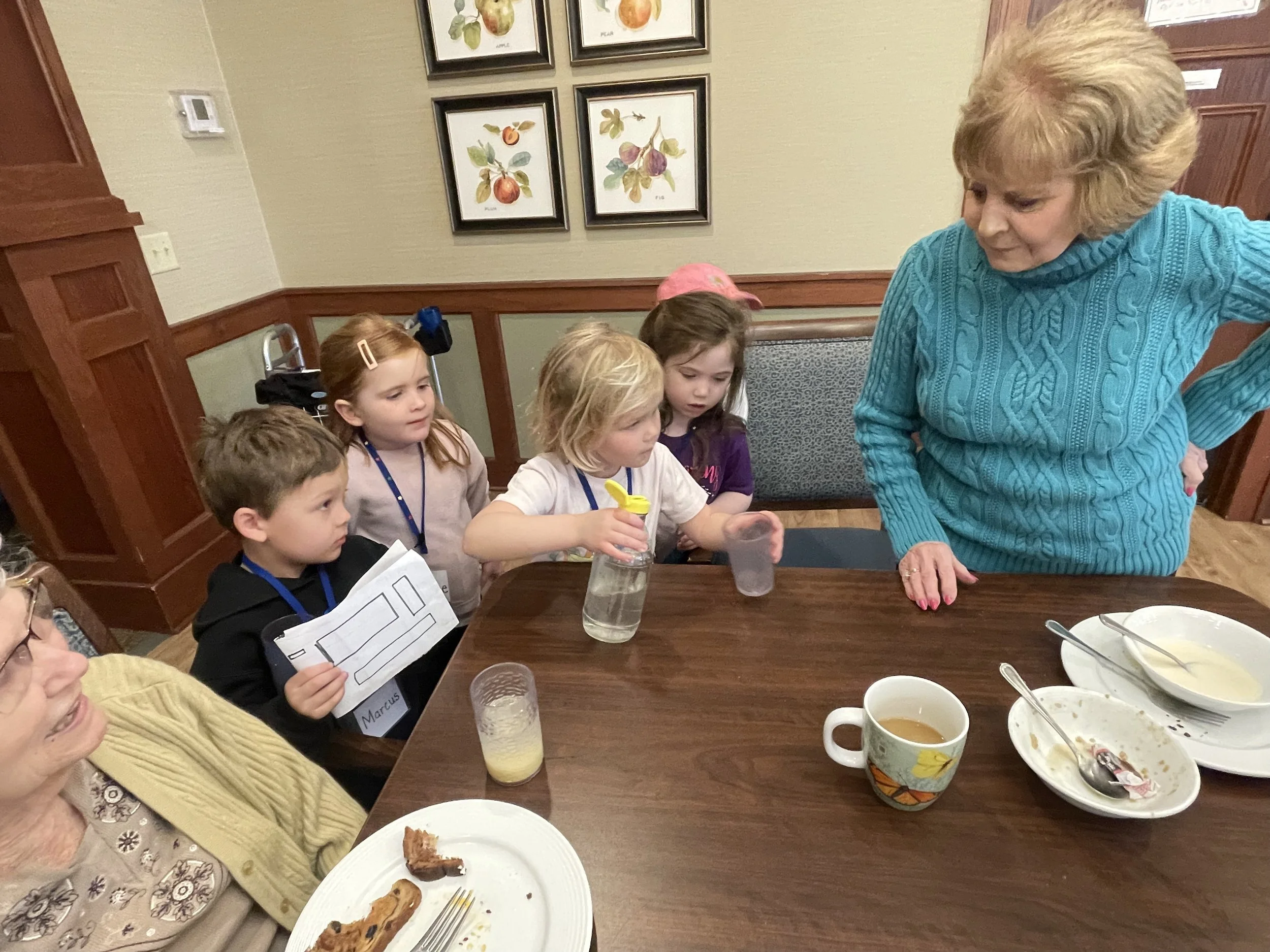
Sharing maple sap with the memory care seniors
Project: Marigold Dye Project
We recently wrapped up a year-long marigold project where, after planting marigolds from seeds at the end of last year, we harvested them this fall, dried them over the winter, and used them to dye old sheets donated by parents. The sheets were cut into napkin-sized squares first, then dyed by the children and teachers, and sewn together by Darlene and my own mother! This project involved parents, grandparents, teachers, text resources, and the children's endless snipping of marigold stems.
Numerous aspects of the marigold project offered rich experiences as well as essential skills. The fine motor work in using rubber bands for Shibori dyeing, the science and art in predicting color, the gentle hands, patience, and observation in tending to flowers, and learning about a sewing machine are just a few of the many ways in which our class grew through this project.
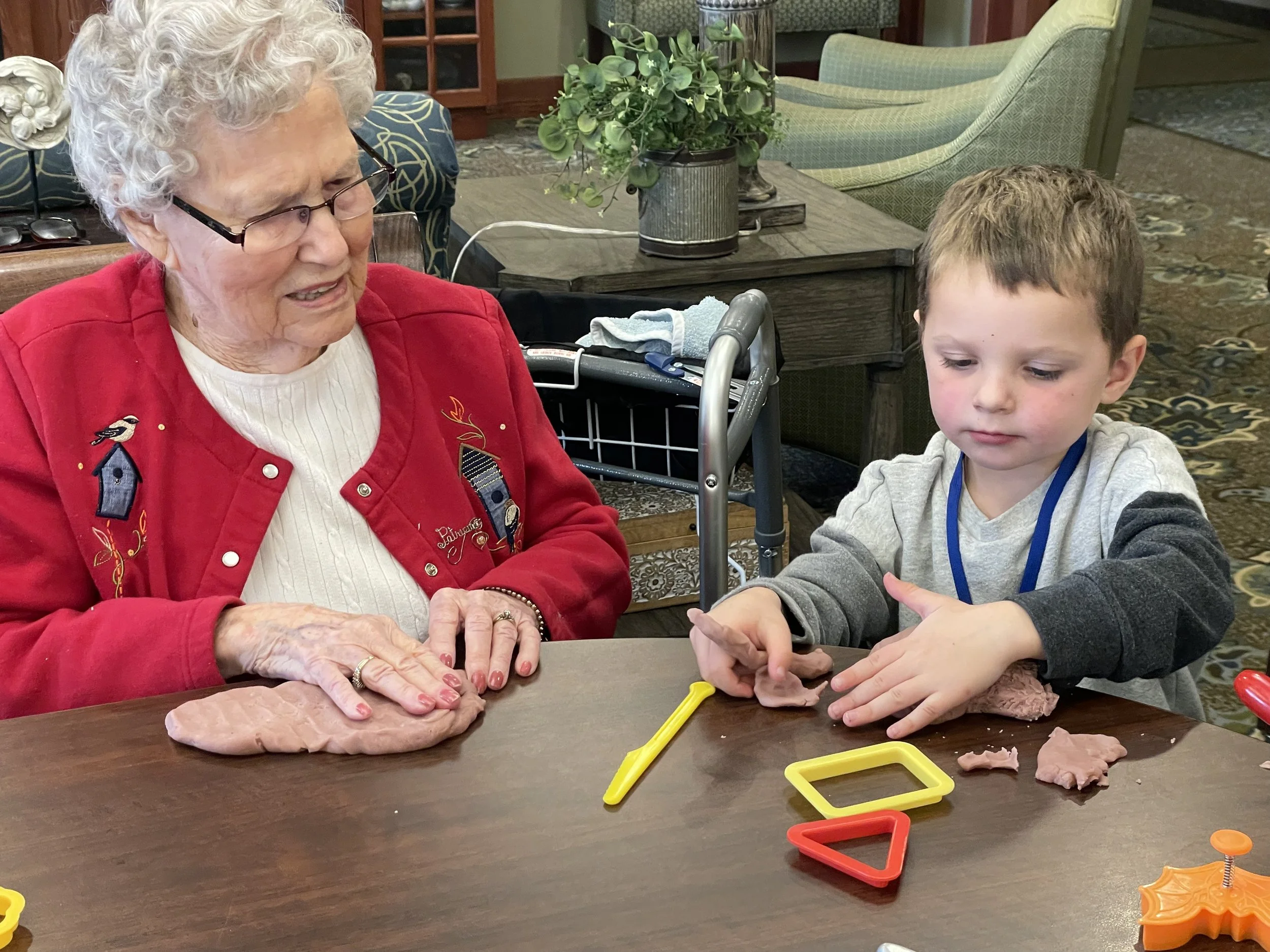
We used some of our marigolds to dye play-dough and were amazed that the color turned pink!
These long-term projects are such an organic way to sew together the important elements within early childhood education: collaboration, connection with the seasons and the natural world, sensory exploration of materials, and connection with others in the community.