
In the Winter Room at Inver Glen, I’ve been noticing voluntary acts of kindness, and smiles when one toddler helps another. As I prompted the group to thank a family for coming to our class and bringing a book and a treat to celebrate a birthday, I began to wonder about where and how gratitude is interwoven into early childhood development.
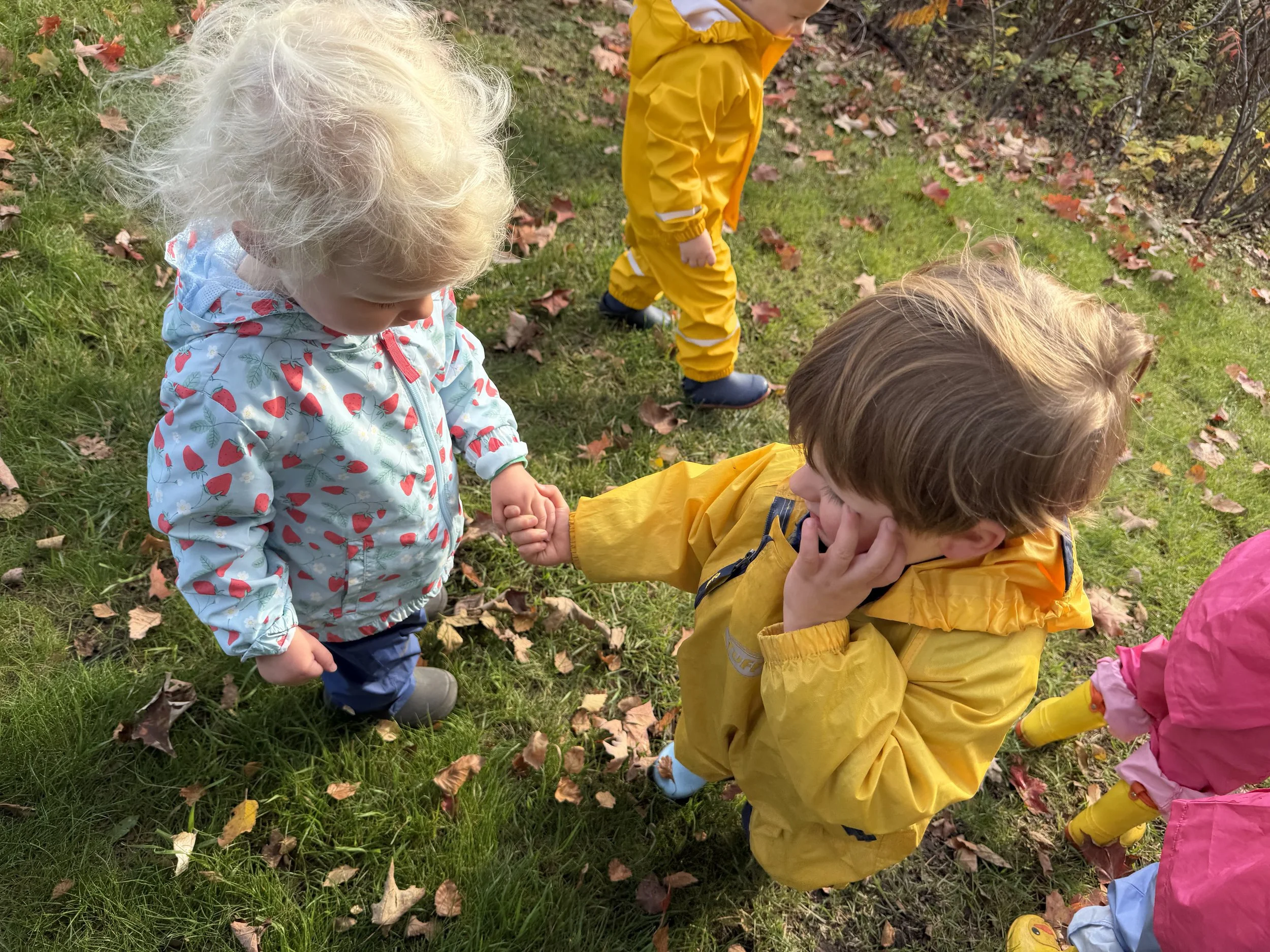
I think I see the beginnings of gratitude. The hand finding a neighboring friend’s back at circle time, the smile with lips and eyes at the giver of the toy that someone has been waiting for, and the wonder at the natural world: “the moon! I see the moon!” or “this is like a castle, when we are standing in the trees,” sometimes, we even hear declarations of, “Miss Jen, I happy now! This makes me happy!” Could it be that comfort, awe, and joy are precursors to gratitude? In a way, yes. An interesting study confirmed that children who had a strong understanding of emotions at age three, had a stronger understanding of gratitude at age 5. Perhaps our smallest bodies use touch, eye contact, proximity, and body language as the carriers of this big, complex phenomenon we call gratitude before they have words for the feelings that underpin it. Maybe these small actions are the seeds that eventually grow into gratitude.
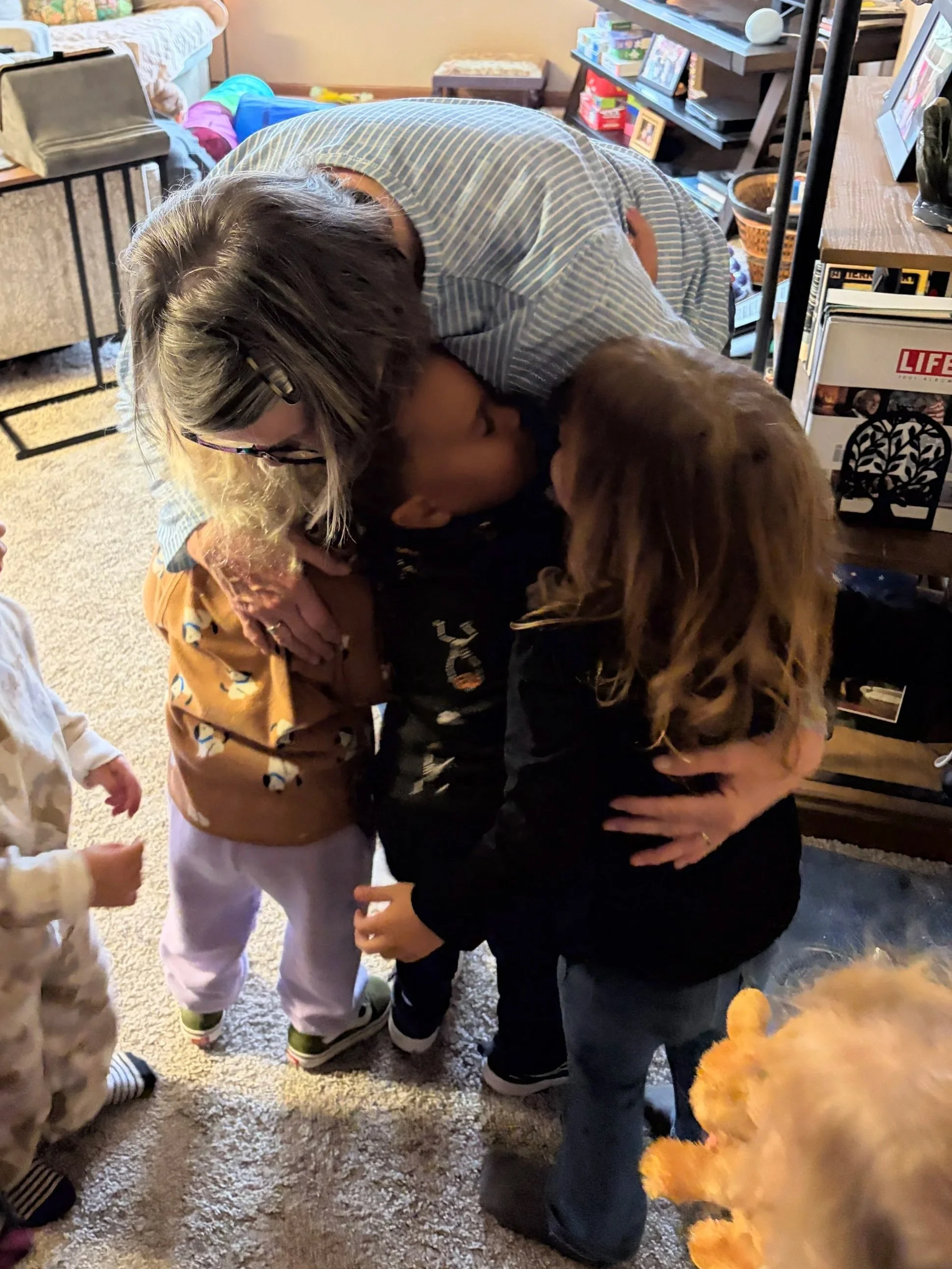
The research is clear: the developmental arc of gratitude is long and worthwhile. Deep, rich thankfulness is not a light switch. It is not something that is absent one day and there the next. Gratitude is built from tiny beginnings that turn into steps, that turn into a full-fledged complex understanding and skill in the adolescent years. While it is important to teach saying, “thank you,” that is only the scaffold that will later hold the deeper, richer meaning. The four-step process of developing gratitude that children move through involves first noticing an act or a gift, then later thinking about why someone may have done that, and how it felt to them, feeling something about it, and finally doing or saying something in response.
Whether you are gathering for Thanksgiving, or simply in your daily life, modeling and making explicit these steps highlights and encourages acts of kindness and the gratitude they create. It is well-established that the ability to express and practice gratitude benefits mental and physical health, sleep, self-esteem, empathy, relationships, resilience, and quality of life. This is a truly valuable life skill and worthy of some mindful effort, but that does not mean a big, huge production or a program. Milena Batanova, the director of research and development at Harvard’s Make Caring Common Project, aptly states: “Gratitude is multifaceted, but it doesn’t have to be complicated.”
Here is a short list of simple ways to cultivate gratitude in young children:
● Point out acts of kindness, or people expending effort toward others
● Talk about the feelings of the giver and the receiver
● Reflect on times you have felt grateful
● Find opportunities that are ripe for gratitude like volunteering, time in nature, time with family, making things for others
● Read books about gratitude and kindness and talk about them
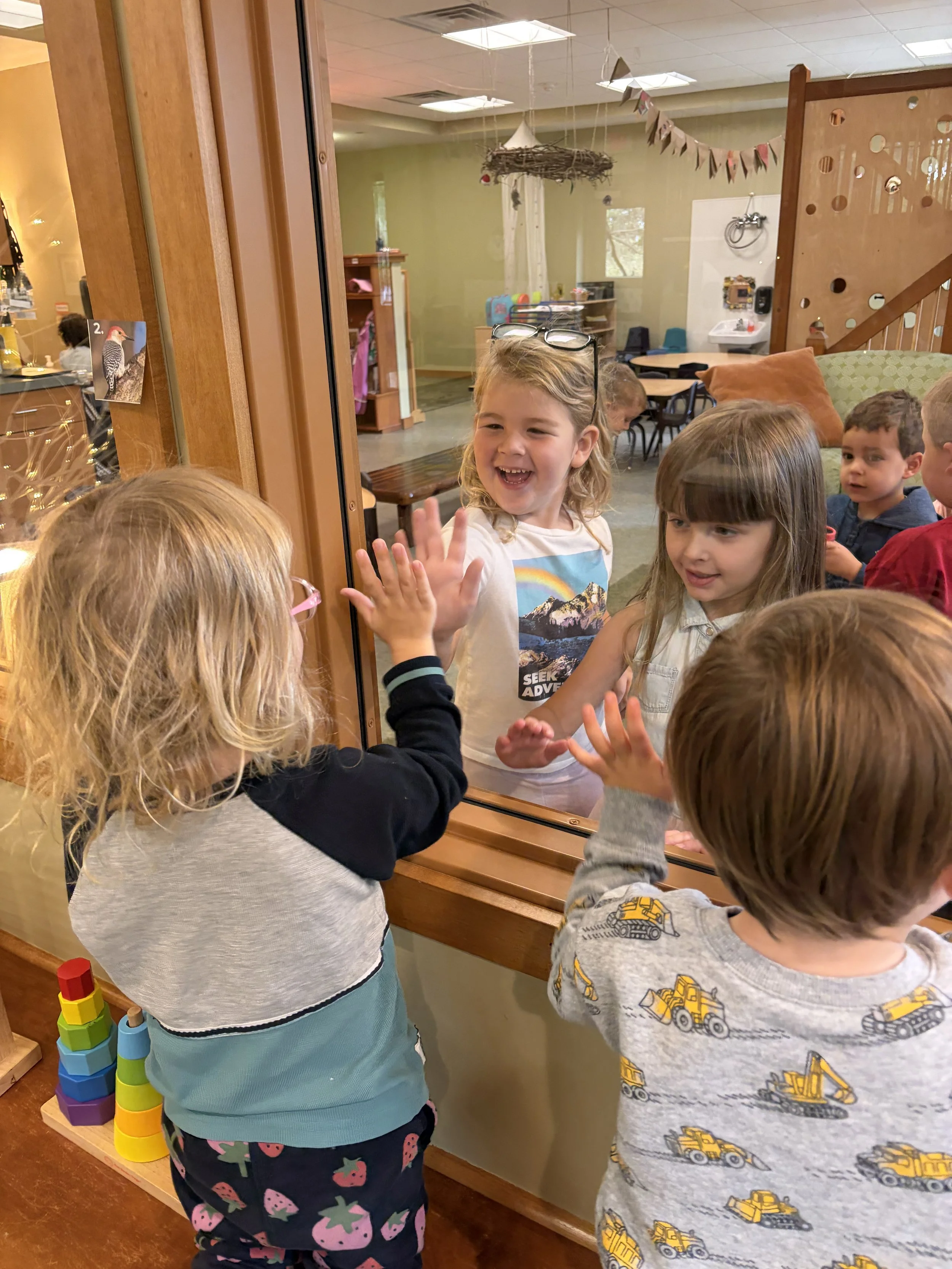
I think about how at the age of two just about everything is new. Every day is an introduction to several new things, whether it be vocabulary, objects, feelings, ideas, places, or people. Truly, no two days are the same. I think of the great Maya Angelou and her words, “Today is a wonderful day. I’ve never seen this one before.” Those few words convey so succinctly the scope and miracle of the endless permutations of people, events, ideas, and objects that we as adults brush off as “just another day.” We forget, sometimes, the revelation and joy of discovery in our daily lives that is very much the essence of toddlerhood. Whatever the research says, I am certain that if adults look for the seeds of gratitude in the young people around them, we will learn something too.
Just a Few Children’s Books About Gratitude:
We Are Grateful: Otsaliheliga by Traci Sorell
Thank You, Omu! by Oge Mora
Thank You by Jarvis
Every Little Kindness by Marta Bartolj
Apple Cake by Dawn Casey, illustrated by Genevieve Godbout
Thank You, Everything by Icinori
The Thankful Book by Todd Parr
Resources:
https://www.firstthingsfirst.org/first-things/teaching-young-kids-about-gratitude/
https://mcc.gse.harvard.edu/whats-new/building-blocks-more-grateful-kids
https://www.psy.ox.ac.uk/research/social-foundations/Gratitude
https://pmc.ncbi.nlm.nih.gov/articles/PMC5224866/
https://www.apa.org/news/podcasts/speaking-of-psychology/gratitude-matters
https://www.psy.ox.ac.uk/research/social-foundations/Gratitude